Decoding Bonus Wagering Requirements: How They Influence Game Selection Patterns Among Digital Casino Enthusiasts

Bonus wagering requirements set the number of times players must bet a bonus amount before any winnings become eligible for withdrawal, and these conditions shape game selection across digital platforms in measurable ways. Data from multiple markets shows that enthusiasts adjust their choices based on contribution percentages attached to each title, where slots often count at 100 percent while many table games contribute far less or nothing at all.
Core Mechanics Behind Wagering Rules
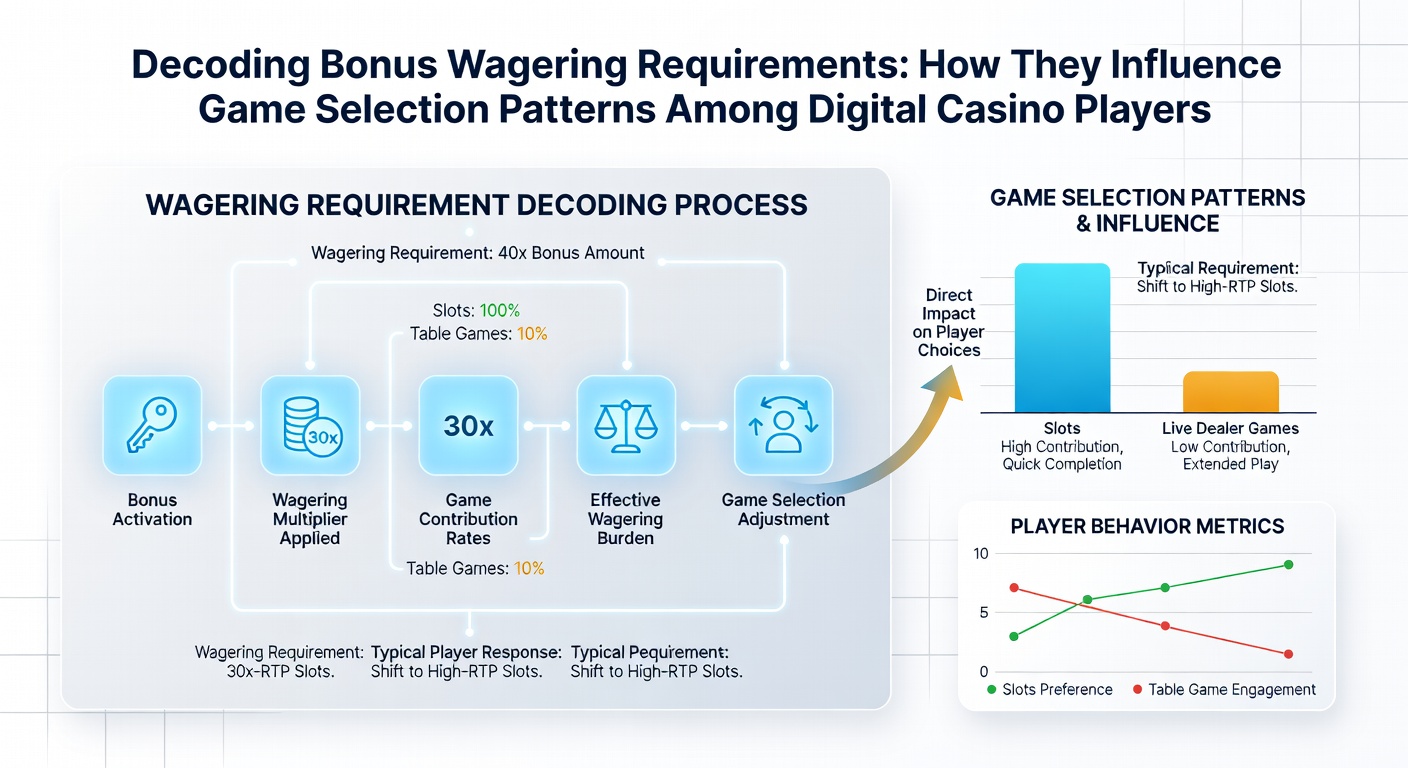
Operators publish these rules in clear terms that list eligible games and their specific contribution rates, which directly guide how users allocate playtime once a bonus activates. Research from the Alcohol and Gaming Commission of Ontario indicates that players who receive deposit-matched bonuses frequently shift toward high-contribution slots to clear requirements faster, whereas those without active bonuses maintain steadier patterns across roulette and blackjack tables.
Contribution tables function as decision frameworks because completing a 30x requirement on a $100 bonus demands $3,000 in qualifying bets, and users calculate which titles deliver the quickest path to that total. Patterns emerge when contribution rates drop below 20 percent for certain card games, prompting many enthusiasts to avoid those options until requirements are met or expired.
Observed Shifts in Game Selection Data
Platform analytics collected across 2025 and into early 2026 reveal consistent spikes in slot traffic immediately after bonus claims, followed by gradual returns to table games once wagering thresholds clear. One industry report tracking European markets found that average session lengths on video slots increased by 18 percent during active bonus periods compared with non-bonus sessions, while blackjack play declined during the same windows.
These adjustments occur because enthusiasts who study the fine print recognize that certain progressive jackpot slots carry reduced contribution rates, leading them to select standard reel games instead when speed matters most. Observers note that mobile interfaces make these calculations easier through in-app filters that sort titles by contribution percentage, allowing quick identification of optimal choices.
Regulatory Developments and Market Responses in 2026
By May 2026 several jurisdictions introduced updated transparency rules requiring operators to display contribution percentages directly on game thumbnails rather than in separate terms pages, and early compliance data shows modest changes in selection behavior. The Alcohol and Gaming Commission of Ontario reported that clearer labeling correlated with a 7 percent rise in table-game trials during bonus periods among users who previously avoided them entirely.
Similar updates appeared in Australian markets where state regulators mandated standardized contribution disclosures, resulting in more balanced play distribution across game types according to aggregated operator submissions. These policy shifts demonstrate how external requirements interact with existing player calculations without altering the fundamental economics of bonus clearing.
Longer-Term Patterns Among Frequent Users
Longitudinal tracking of loyalty program members reveals that individuals who encounter multiple bonus cycles develop repeatable strategies, such as maintaining separate bankrolls for bonus play versus standard sessions to preserve preferred game selections. Figures from academic studies on digital gambling behavior indicate that repeat users spend additional time reviewing terms before claiming offers, which reduces impulsive shifts toward high-contribution titles.
Seasonal promotions tied to specific events produce temporary spikes in particular game categories, yet the underlying influence of wagering rules remains constant across these fluctuations. Data sets compiled by research groups focused on online entertainment show that contribution awareness spreads through community forums and review sites, creating shared knowledge that further refines collective selection patterns over time.
Conclusion
Wagering requirements continue to function as primary filters that organize game selection across digital casino environments, with contribution rates serving as the decisive variable in user decisions. Regulatory efforts toward greater transparency, including those implemented by May 2026, provide additional data points that allow enthusiasts to refine their approaches without changing the core mechanics at work. Continued monitoring of platform metrics and compliance reports will document how these dynamics evolve alongside new game releases and policy adjustments in different regions.