How Distributed Ledger Technologies Facilitate Transparent Payout Verifications in Online Slot Networks

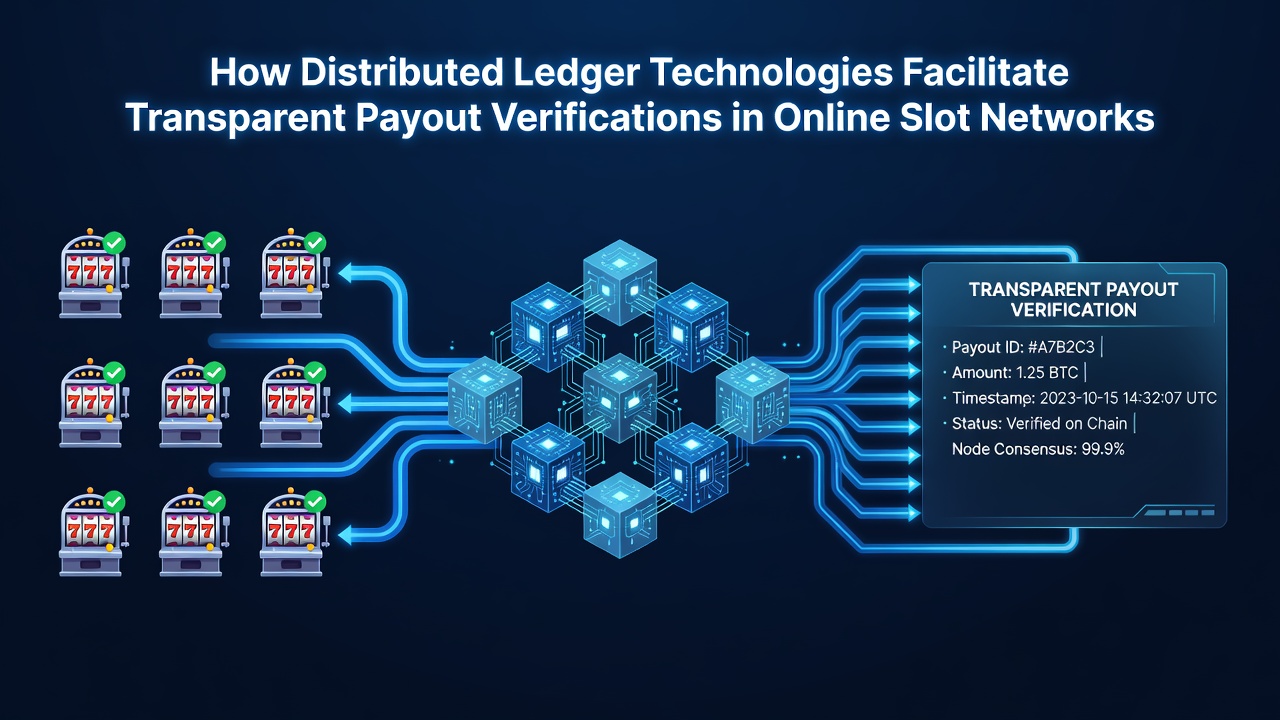
Distributed ledger technologies create shared, tamper-resistant databases that record every transaction in online slot networks as a sequence of linked data blocks. Operators and players gain access to the same verifiable history without relying on a central authority to confirm payout amounts or timing. Each entry includes cryptographic hashes that link back to previous records, so any attempt to alter a payout figure breaks the chain and becomes immediately detectable across all participating nodes.
Immutable Transaction Logs Drive Verification Processes
Online slot networks generate thousands of micro-transactions during regular play, and distributed ledgers capture these events in real time. When a player hits a winning combination the system writes the outcome, stake amount, and resulting payout to the ledger as a single atomic entry. Nodes distributed across different jurisdictions reach consensus on the validity of that entry before it becomes permanent. This consensus mechanism eliminates disputes because every participant holds an identical copy of the record, and researchers at institutions tracking gaming technology note that reconciliation times drop from hours to seconds once the ledger replaces traditional centralized databases.
Data from multiple networks shows that payout verification cycles shorten dramatically when ledgers replace siloed accounting systems. Regulators in regions such as Ontario can query the public ledger directly rather than requesting reports from individual operators. The same holds in Singapore, where the Casino Regulatory Authority monitors live feeds from licensed platforms through ledger APIs. Because the records remain synchronized, compliance checks move from periodic audits to continuous oversight.
Smart Contracts Automate Payout Execution and Proof
Smart contracts embedded in distributed ledgers execute payout logic automatically once predefined conditions are met. A slot game contract might specify that a three-symbol jackpot triggers an immediate transfer of funds to the winning wallet address. The contract code itself sits on the ledger, so operators cannot change the rules mid-session without creating a new, visible version that players and regulators can inspect. Execution occurs only after the network confirms the triggering event through multiple independent nodes, and the resulting transaction carries a timestamp and digital signature that proves the payout occurred exactly as programmed.
Players receive a transaction receipt containing the contract address, block number, and cryptographic proof. Anyone can paste that receipt into a public explorer to confirm the funds moved from the operator’s reserve wallet to the player’s account without contacting customer support. This level of self-service verification reduces support ticket volume and builds operational efficiency across networks that adopted the technology before July 2026.
Cross-Border Interoperability and Regulatory Reporting
Distributed ledgers operate independently of any single jurisdiction’s banking rails, which matters when slot networks serve players across multiple countries. A payout recorded on a ledger in one time zone appears instantly on nodes located elsewhere, allowing regulators to trace funds without navigating separate banking systems. Reports generated from ledger data include every payout above a certain threshold, sorted by player jurisdiction, game type, and timestamp. Authorities receive these reports in standardized formats that integrate directly into their oversight dashboards.
Industry associations such as the Canadian Gaming Association have published frameworks that map ledger data fields to existing regulatory reporting requirements. These frameworks help operators configure their systems once rather than building separate compliance modules for each market. The approach also supports audit trails that stretch back through every version of a game’s payout table, because each update receives its own ledger entry that remains permanently linked to prior versions.
Reducing Fraud Vectors Through Consensus Mechanisms
Traditional slot systems store payout histories in operator-controlled databases that present a single point of failure or manipulation. Distributed ledgers replace that model with consensus protocols requiring agreement from a majority of nodes before any record is accepted. An attacker would need to compromise enough independent nodes simultaneously to rewrite history, an effort that becomes exponentially more difficult as the number of participating validators grows. Networks that reached maturity by mid-2026 typically operate with validator sets spanning operators, independent auditors, adn academic research groups, further raising the coordination cost of any fraudulent activity.
Studies conducted by university research teams examining ledger-based gaming platforms report measurable declines in chargeback rates once players gain direct access to immutable payout proofs. The same studies document faster resolution of player complaints because the ledger itself serves as the authoritative source rather than competing internal logs.
Conclusion
Distributed ledger technologies embed payout verification directly into the infrastructure of online slot networks through immutable records, executable smart contracts, and multi-node consensus. Regulators gain continuous visibility while players obtain independent proof of each transaction. Networks that implemented these systems before July 2026 demonstrate shorter reconciliation cycles and lower dispute volumes compared with earlier centralized approaches. The technology continues to evolve as more jurisdictions integrate ledger data into their oversight frameworks, yet the core mechanism remains consistent: every payout exists as a verifiable, tamper-evident entry that all authorized parties can examine without intermediaries.