Mosquito Grizzly Bear’s Head Lean Man First Nation Accelerates $100 Million Casino Relocation in North Battleford
Mosquito Grizzly Bear’s Head Lean Man First Nation Accelerates $100 Million Casino Relocation in North Battleford

The Project Takes Shape Along Highway 16
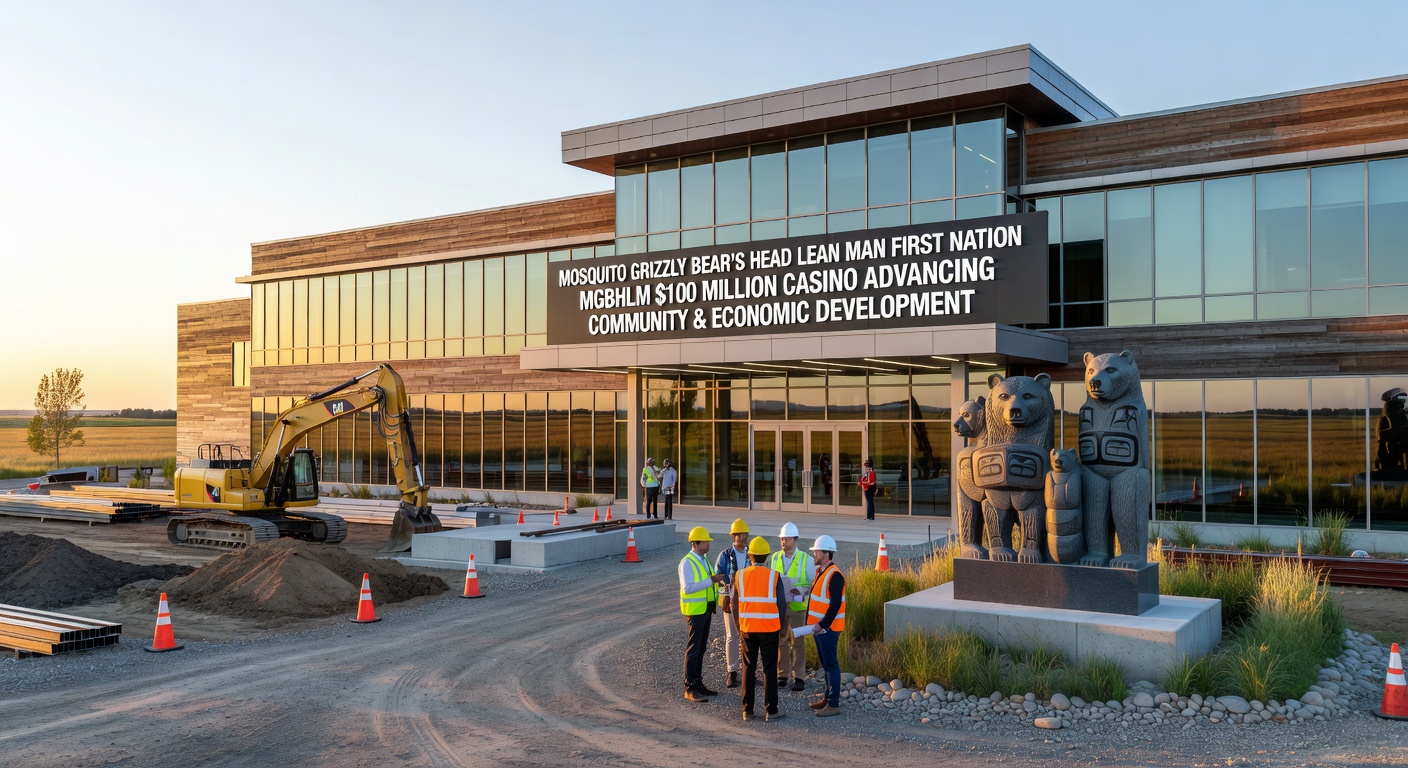
Observers note how the Mosquito Grizzly Bear’s Head Lean Man First Nation (MGBHLM) moves forward with its ambitious $100 million casino and resort project in North Battleford, Saskatchewan; this initiative relocates the existing Gold Eagle Casino to a sprawling 67-acre site along Highway 16 West, where planners envision a full-scale resort complete with a new hotel and convention center. Data from recent updates reveals that stakeholders gathered at a community meeting on April 14, 2026, to hear the latest progress reports, and construction crews expect to break ground soon, wrapping up the build in about three years. What's interesting is the site's prime location, right off a major highway that funnels traffic through the Battlefords region, positioning the development to draw crowds from across western Canada.
Those who've followed First Nations gaming projects in Saskatchewan know that such ventures often hinge on partnerships like teh one here with the Saskatchewan Indian Gaming Authority (SIGA), which oversees operations; turns out, this relocation promises not just a bigger footprint but a boost to local infrastructure, since the new setup includes modern amenities designed to host events and tourists year-round. And while the original Gold Eagle Casino has served the community since its inception, experts point out that expanding to 67 acres allows for features like expanded gaming floors, dining options, and entertainment venues that the current site simply can't accommodate.
Community Engagement at the Forefront
Attendees at that April 14 meeting left with clear timelines and projections, as MGBHLM leaders laid out how the project aligns with broader goals of economic self-sufficiency; figures presented there show construction creating over 350 jobs in the short term, while the finished resort stands to employ 400 people long-term, many drawn from local First Nations and surrounding towns. But here's the thing: the event wasn't just about numbers, since discussions also covered environmental considerations and how the development integrates with North Battleford's growth plans, ensuring buy-in from residents who live nearby.
People often find that these public forums build momentum, and this one did just that, with updates on permitting processes and financing already secured through tribal resources and SIGA backing; observers highlight how such transparency helps address concerns early, whether about traffic on Highway 16 or the influx of visitors pegged at an estimated 500,000 annually once doors open. So, as the nation advances, the meeting served as a milestone, signaling that shovels could hit dirt before the year ends.
Key Figures Driving the Initiative
Chief Tanya Stone of MGBHLM stands at the helm, championing the project as a pathway to prosperity; alongside her, FSIN Chief Bobby Cameron lends vice-chief support from the Federation of Sovereign Indigenous Nations, emphasizing unity across Saskatchewan's First Nations. SIGA CEO Zane Hansen brings industry expertise, given his role in managing multiple casinos province-wide, and North Battleford Mayor Kelli Hawtin represents municipal interests, coordinating on everything from utilities to tourism promotion.
Take Chief Stone, for instance: her leadership has navigated the regulatory landscape, securing approvals that let this $100 million vision become reality; meanwhile, Hansen's team at SIGA ensures operational standards match those of top facilities, drawing on years of experience in Saskatchewan gaming. Cameron's involvement underscores the collaborative spirit, as FSIN advocates for projects that uplift multiple communities, and Hawtin's participation bridges Indigenous and non-Indigenous stakeholders, smoothing the path for shared economic gains. It's noteworthy that this quartet's alignment has accelerated timelines, turning what could have been a drawn-out process into a focused push.
Economic Ripple Effects and Job Creation
Data indicates the project will pump vitality into North Battleford's economy, with those 500,000 expected visitors spilling over into hotels, restaurants, and shops beyond the resort itself; construction alone generates over 350 positions, from skilled trades like electricians and carpenters to support roles, and many of these go to locals trained through First Nations programs. Long-term, the 400 jobs encompass dealers, hospitality staff, and management, offering stable careers that outpace seasonal tourism gigs in the region.
Yet the real payoff lies in self-sufficiency, as MGBHLM channels revenues back into community services, education, and health initiatives; studies from similar SIGA projects, like those tracked by the Government of Saskatchewan's economic development office, reveal how casinos have historically added millions to Indigenous economies while spurring regional growth. Turns out, Highway 16's corridor already sees heavy truck and traveler traffic, so layering in a destination resort amplifies that flow, potentially rivaling draws in larger cities like Saskatoon or Regina.
Experts who've analyzed these developments observe patterns where initial skepticism gives way to enthusiasm once jobs materialize; in North Battleford, with its population around 14,000, an influx of 500,000 visitors means packed events at the convention center, sold-out shows, and bustling gaming floors, all while the hotel provides upscale stays that current options lack. And since construction spans three years, the economic lift starts now, sustaining workers through phases from site prep to finishing touches.
Timeline and What Lies Ahead
Now, with the April 14, 2026, meeting in the rearview, planners target groundbreaking in late 2026 or early 2027, followed by a methodical three-year build that accounts for Saskatchewan's harsh winters; phases include foundational work in year one, structural rises in year two, and interiors plus landscaping by completion around 2029 or 2030. Those attending the update heard assurances on sustainability features, like energy-efficient designs that nod to First Nations stewardship of the land.
But here's where it gets interesting: the relocation from the current Gold Eagle site frees up urban space for other uses, while the new 67-acre expanse allows breathing room for expansions down the line, whether adding golf courses or RV parks; observers note that SIGA's track record ensures the resort meets high standards, from slot machines to table games, all regulated under provincial oversight. So, as cranes rise along Highway 16, the project not only reshapes North Battleford's skyline but cements MGBHLM's role in Saskatchewan's gaming landscape.
Broader Context in Saskatchewan Gaming
People familiar with the scene know Saskatchewan's First Nations have pioneered gaming since the 1990s, with SIGA operating 13 casinos that collectively draw millions; this MGBHLM effort fits that mold, relocating Gold Eagle to supercharge its potential amid growing demand for integrated resorts. Figures from industry reports show visitor numbers climbing post-pandemic, and a Highway 16 spot taps into Alberta cross-border traffic, making it a smart play.
There's this case where another SIGA property expanded and saw jobs double within years, much like projections here; the convention center, in particular, positions North Battleford for conferences and weddings that smaller venues can't handle, while the hotel fills a gap for travelers weary of chain motels. Although challenges like supply chain hiccups could arise, the nation's preparation, bolstered by key leaders, keeps momentum steady.
Conclusion
The Mosquito Grizzly Bear’s Head Lean Man First Nation's $100 million push in North Battleford marks a pivotal step, transforming a casino relocation into a full resort beacon along Highway 16 West; with the April 14, 2026, community meeting setting the stage, construction's three-year arc promises 350 build-phase jobs, 400 permanent roles, and 500,000 yearly visitors that fuel tourism and self-reliance. Chief Tanya Stone, alongside FSIN's Bobby Cameron, SIGA's Zane Hansen, and Mayor Kelli Hawtin, steer this toward success, blending Indigenous enterprise with regional growth in ways that echo across Saskatchewan. As the project unfolds, its impacts will ripple outward, solidifying economic ties and opening doors for years to come.